
About

An initiative, not an institution — and precise about the difference.

Force Academy is an interdisciplinary learning and research initiative based at the International Division of Chongqing Weiming School in Chongqing, China. It is not a separate legal entity, and we choose our words carefully: everything the Academy does — its courses, its research program, its platform — happens within and through the International Division.

That precision is not legal boilerplate. It reflects the same discipline we teach: say exactly what something is, no more and no less. The Academy’s credibility rests on the verifiable work it produces, not on institutional embellishment.

The Idea

Founded on a question, structured as a method

The Academy began with an observation and a bet. The observation: AI systems can now produce fluent answers to most questions schools know how to ask, which quietly ends the era when education could justify itself through answer-production. The bet: the durable value of education lies in what surrounds the answer — the question, the assumptions, the evidence, the uncertainty, the critique, the revision, and the responsibility.

Those eight words became the Academy’s inquiry cycle, and they are treated literally: the cycle is the structure of the curriculum, the rubric for grading, and the template for documenting student work. Underneath it stand four pillars — mathematical modeling, AI and human judgment, complex systems, and interdisciplinary research.
Honesty Box

What we are — and are not

In the spirit of stating assumptions, we state ours plainly.

What we are

  • A learning and research initiative within an established school’s International Division
  • A documented curriculum: fifteen courses, anchored by a 51-module mathematical modeling sequence
  • A research program whose work is prepared for external, independent judgment
  • A web-native learning platform with a taught AI-use protocol

What we are not

  • A separate legal entity or independent institution
  • A holder — or claimant — of formal international partnerships we cannot document
  • A program that measures itself by rankings or marketing language
  • A place where polished answers are displayed without their thinking

Leadership

Direction

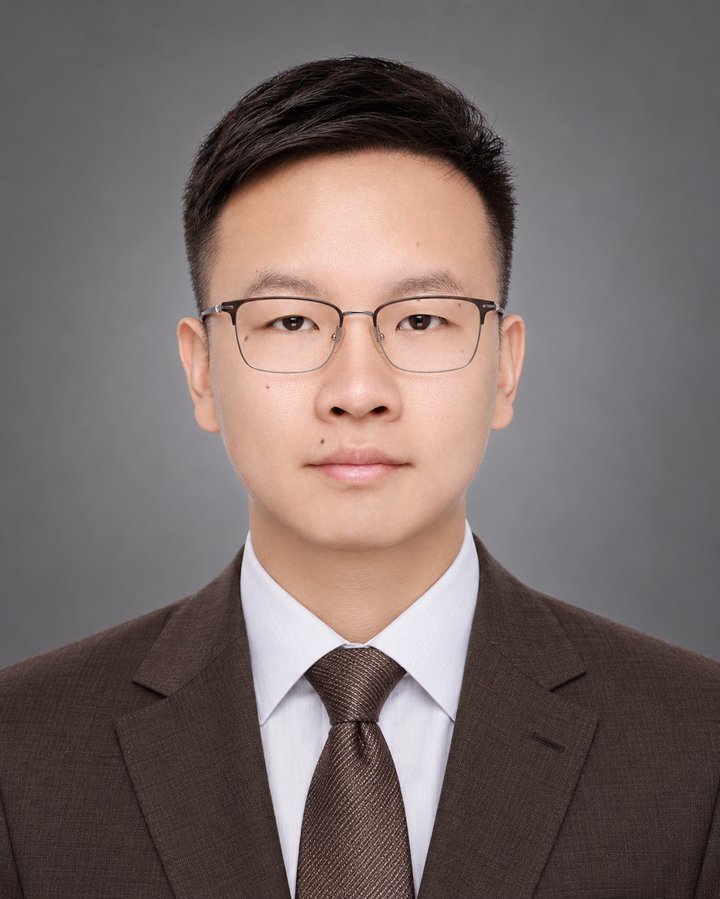
Portrait of Kaiyao Duan, Principal of the International Division and director of Force Academy
Kaiyao Duan 段凯耀

Kaiyao Duan 段凯耀

Founder & Director, Force Academy · Principal, International Division, Chongqing Weiming School

Kaiyao Duan did not set out to build a program about AI — he set out to build a mathematics program that refused to waste students’ ability on answer-production. His own path ran through engineering first: as an engineer at General Electric’s energy group in France before turning to education. In the classroom he has taught French, European history, physics, mathematics, and statistics — a range that shows up directly in the Academy’s refusal to treat mathematics as a subject with no neighbors.

The observation that became Force Academy: the strongest learners were not the fastest calculators but the ones who asked what a problem was quietly assuming. That became a 36-chapter modeling course, then fifteen courses, then a research program and a web-native platform. As Principal of the International Division, he teaches within the Academy he directs — using the same AI tools the students use, under the same rule the students follow: whatever you produce, you must be able to defend without the machine.

Selected record

  • Recipient, University of Chicago Outstanding Educator Award
  • Presenter on AP Statistics, College Board AP Annual Conference
  • Presenter, IMMC International Mathematical Modeling Challenge global summit
  • Member, IOAI China Region Scientific Committee
  • Lead, national STEM master-teacher studio, China Society of Educational Development Strategy
  • Instructor and judge, Beijing Normal University mathematical modeling summer camp

Current writing

Being Seen(被看见)

A book for parents of 10–18-year-olds, in progress: how to notice a child’s real potential in the age of AI — not how to make children “excellent,” but how to stop misreading them. Four parts, twenty-six chapters, built from years of documented student cases.

Where

International Division, Chongqing Weiming School · Chongqing, China