
Learning
The curriculum, in full daylight
No black boxes. The Academy’s program is a documented catalog of fifteen courses, trained habits, and external milestones — structured at every stage by the inquiry cycle.
The Course Catalog
What students take
Fifteen courses, each with a documented syllabus. Grouped the way they are taught — not the way a brochure would sort them.
The Modeling Core
Mathematical Modeling: The System Course
The Academy’s flagship. Every module of the classic UMAP modeling library — from the human cough and the digestive process of sheep to Lotka–Volterra, Richardson’s arms race, and the budgetary process — sequenced into three semesters across seven application domains, with a parallel eight-chapter strand on scientific visualization in Python.
Mathematical Modeling: The Case Course
The systematic path through the craft itself: problem decomposition, variables and assumptions, the elementary model families, optimization, probability and simulation — closing with the full pipeline from sensitivity analysis to paper writing.
Thinking & Judgment
Model Thinking
Built on Scott Page’s The Model Thinker (University of Michigan): normal and power-law distributions, network models, entropy, random walks, path dependence, cellular automata, Markov processes, and system dynamics — learned as a connected lattice for thinking about a complex world, not a list of formulas.
Logic & Critical Thinking
Argument structure, deduction and induction, Mill’s methods, causal reasoning, Bayesian probability, sentential logic, and quantifiers — the grammar of the critique step in the inquiry cycle, taught as its own discipline.
Mathematics for AI
Mathematics for AI
The mathematics that makes intelligent systems legible: linear algebra, calculus and gradients, probability, and information theory — every concept landing in a concrete AI application, from backpropagation to loss-function design.
From Arithmetic to Machine Learning
A single continuous sequence from numbers and operations through scientific computing, calculus, matrices, probability, and graph theory to supervised learning and clustering — proof that the distance from grade-school arithmetic to machine learning is walkable, one documented step at a time.
NOAI: The AI Olympiad Course
Preparation for the National Olympiad in Artificial Intelligence (China region of IOAI), built on four pillars: knowledge representation and reasoning, machine-learning principles, reasoning under uncertainty, and AI ethics. Not a course in using AI tools — a course in understanding how the tools think.
Mathematics in Context
Mathematics in History: Five Thousand Years of Capital
One theme per month, from Babylonian compound interest and Thales’ option to the tulip mania, the South Sea crisis, and Black–Scholes — financial history as a vehicle for learning mathematics that reshaped the world, ending with students’ own investment philosophy.
Mathematical Life Lab
Fifteen mathematical life forms — phoenix, quantum octopus, spiral sea dragon — each built on a five-layer framework of geometry, particles, field, energy, and behavior. Students tune parameters, watch morphologies respond, and export the genome: complex systems made tangible.
Foundations of Elementary Mathematics
Real numbers and functions; Euclidean geometry; discrete mathematics and polynomial algebra. The rigorous ground floor under everything else — written from scratch, chapter by chapter.
External Frameworks & Breadth
International Junior Mathematics: The AQA IGCSE Pathway
The junior-high sequence re-taught as a web-native course: every week mapped page-by-page to the AQA Core and Oxford Extended textbooks — with the alignment itself documented in a public audit — and rebuilt as interactive instruments: number-line explorers, algebra tiles, geometry constructors. Concepts form through operation, not memorization.
AP Statistics
The complete AP Statistics course — data, sampling, probability, and inference — supported by a curated library of reference texts and past examinations.
Humanities & Social Science Research
Research, writing, debate, and economics programs — from the John Locke Institute and National History Day to The Concord Review, Model UN, and the Wharton investment challenges — catalogued honestly by tier so students choose depth over collecting badges.
Outreach: Math & AI Modeling Workshop
The Academy’s modeling pedagogy adapted for younger students: systems thinking, a first mathematical model, ecosystem projects, AI literacy, and a capstone — evidence that the inquiry cycle scales down as well as up.
The Spine
Inside the system course
Fifty-one UMAP modules across three semesters and seven application domains — the case course in 36 chapters underneath it. Two views of the same discipline.
- I
Foundations & Visualization
Weeks 1–10. Modeling as a way of seeing: real problems, first models, and the craft of making data speak — with Python plotting learned alongside.
- II
Dynamic Systems & Randomness
Weeks 11–22. Systems that evolve: difference and differential equations, stochastic processes, simulation — biology, epidemics, and public budgets as the running examples.
- III
Advanced Modeling & Synthesis
Weeks 23–32. The calculus of variations and optimal control, chaos and complex systems, and a capstone project that goes the full distance from question to defended paper.
The case course, in eight movements
- 00–02
Foundations
The discipline before the technique: asking real questions, writing assumptions, and arguing for simplifications before a single equation appears.
- 03–11
Elementary Model Families
Proportional functions, linear models, fitting and regression, integer and linear programming — each family learned through the question it answers.
- 12–14
Optimization Algorithms
Genetic algorithms, differential and difference equations: when closed-form answers stop being enough.
- 15–16
Decision Models
Network flow, matching, and the Analytic Hierarchy Process — mathematics in service of decisions, not just descriptions.
- 17–21
Probability & Simulation
Markov chains, Monte Carlo methods, and grey prediction: reasoning about systems that can only be understood in distribution.
- 22–27
Advanced Optimization
Queueing theory, nonlinear and multi-objective programming, particle swarm optimization, simulated annealing.
- 28–29
Analysis & Evaluation
Cluster analysis and comprehensive evaluation: extracting structure from data and ranking alternatives defensibly.
- 30–35
The Full Pipeline
The complete modeling process — assumptions and argumentation, sensitivity analysis, model evaluation and critique, visualization, and paper writing.
The Path
How learning progresses
Four stages, each moving the source of critique further from the student’s comfort zone.
Systematic Courses
Fifteen documented courses — from the 51-module modeling sequence to logic, the mathematics of AI, an AQA-aligned junior pathway, and five thousand years of financial history — give students the vocabulary and the techniques.
Modeling Training
Assumptions-first problem sets: students practice framing problems, choosing model families, and defending simplifications before computing anything.
Real Problems
Classroom models meet genuine questions — locally observed, publicly argued, honestly limited — documented together with the thinking that produced them.
External Milestones
Research projects are prepared for national competitions and external programs, where outside judges do the critiquing.
The Environment
Tools — and the protocol that governs them
The Academy’s web-native platform makes AI a visible, governed part of daily work.
Large Language Models
AI systems serve as drafting partners and critics — under a taught protocol that keeps assumptions and final judgment with the student.
Live Mathematical Notation
Course materials render typeset mathematics on the web, so notation is never a barrier between the idea and the page.
Interactive Visualization
Data and model outputs are plotted interactively — students explore how parameters move conclusions, not just read static figures.
The AI Protocol
AI may draft, suggest, and critique. Assumptions, final judgments, and responsibility for every claim remain with the student. Whatever you submit, you own — if you cannot defend it without the machine, it is not yet yours.
The Reading Club
Books the Academy reads together
Five reading guides, written in-house for student reading clubs, teacher seminars, and parent sessions. The same rule applies to books as to models: read to sharpen judgment, not to collect quotations.
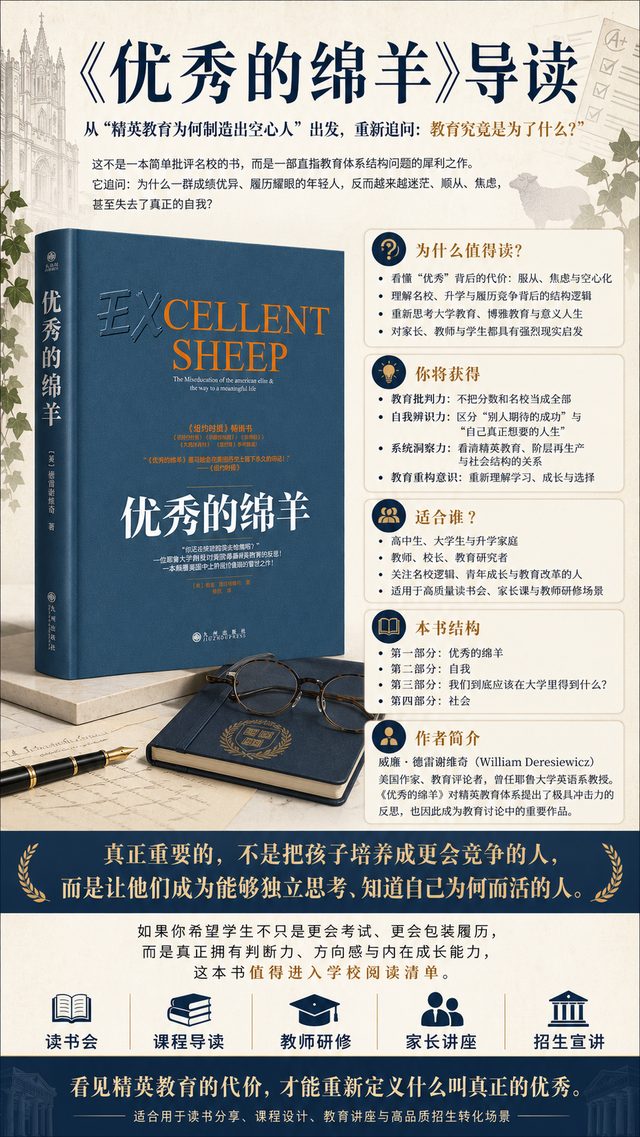
Excellent Sheep
What elite education produces, what it costs, and what education is actually for — the guide behind the Academy’s teacher seminars and parent sessions.
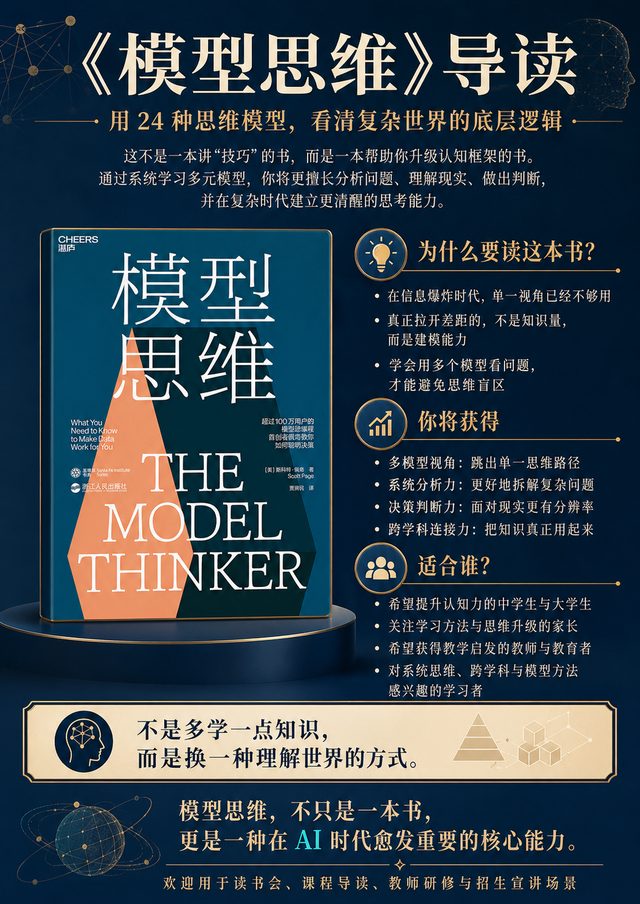
The Model Thinker
Twenty-four thinking models as one connected lattice — the companion volume to the Academy’s Model Thinking course.
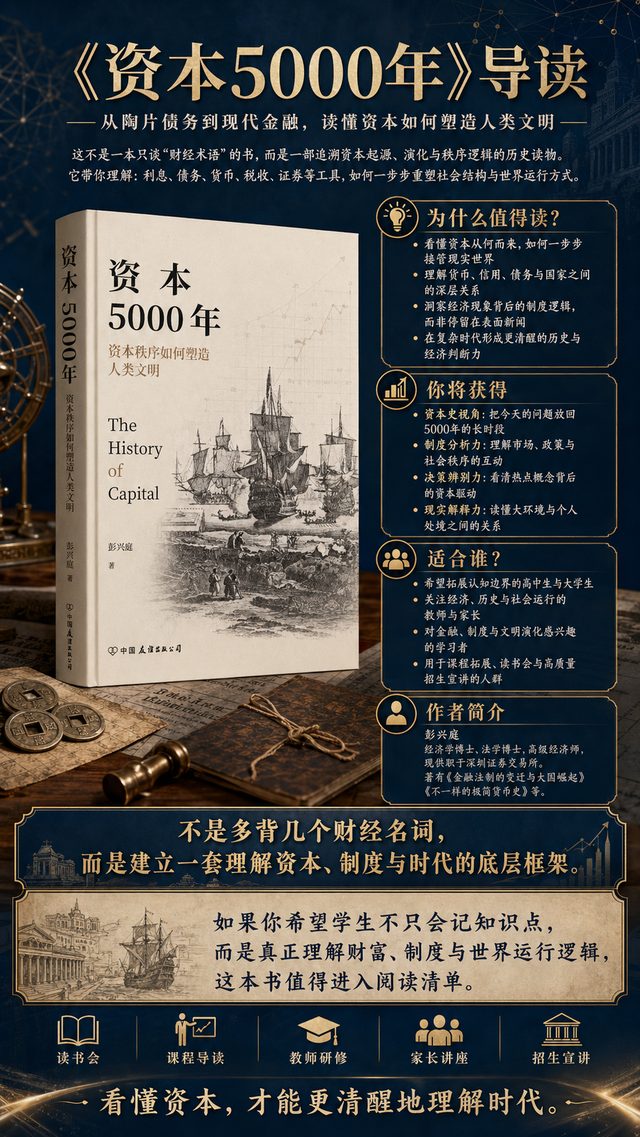
Capital: 5000 Years
From Babylonian debt tablets to modern financial order — read in step with the Mathematics in History course’s year of capital.
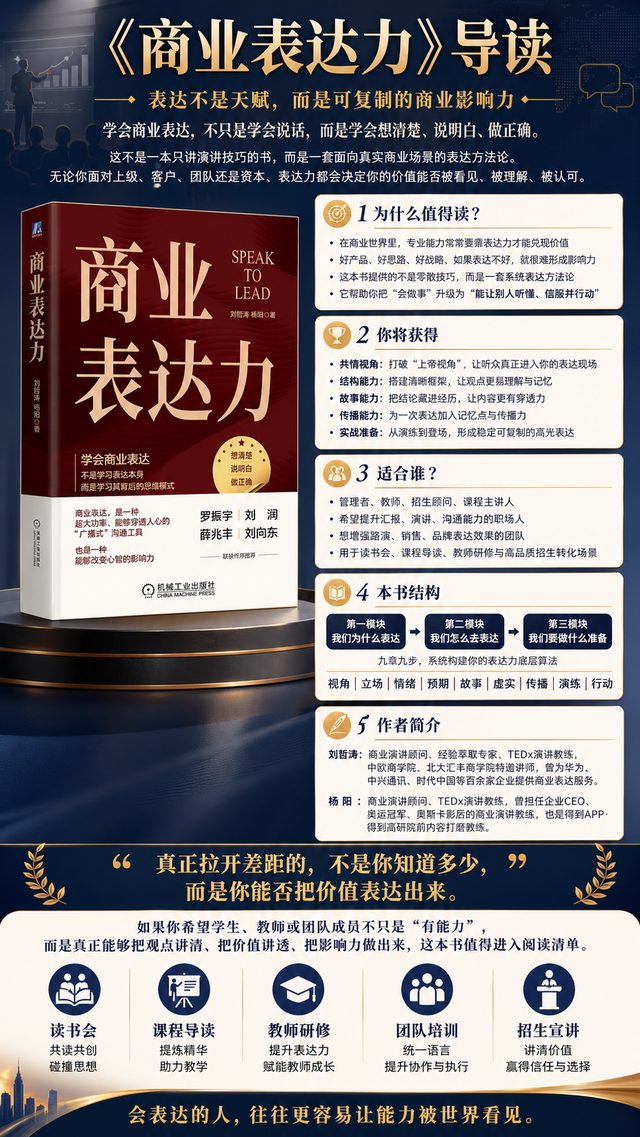
Business Speaking
Expression as a learnable discipline — structure, empathy, story, rehearsal. A defensible idea still has to be communicated.
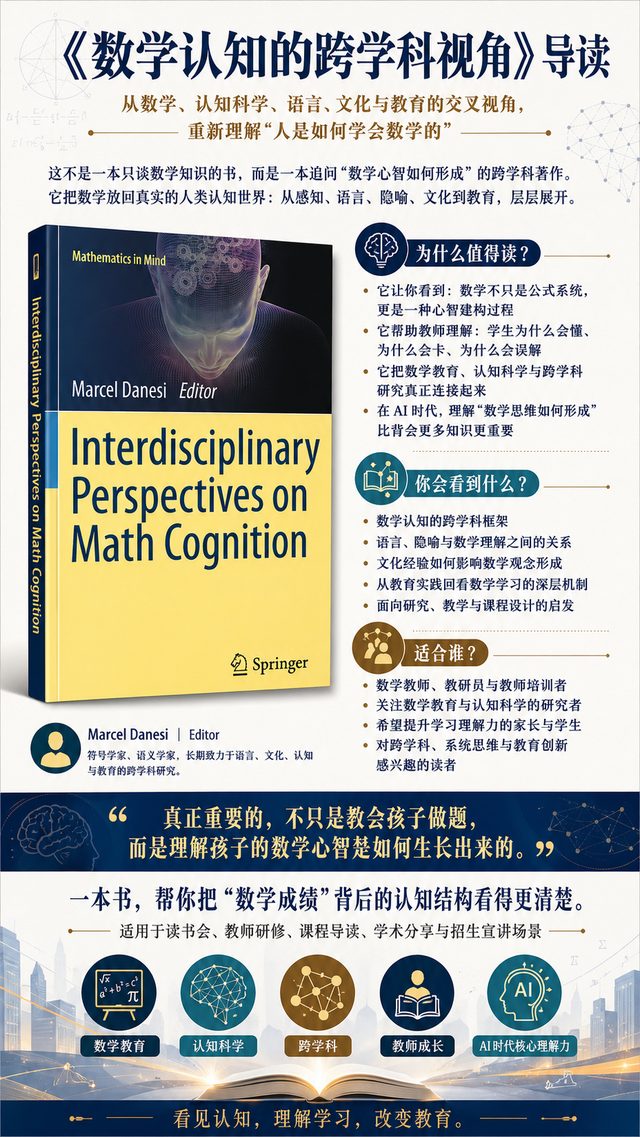
Mathematics in Mind
How mathematical cognition forms — language, metaphor, culture, and education. The Academy’s teacher-development reading.
Beyond the Classroom
Judgment is also trained in the field
Races run, stages stood on, questions asked in public — a few moments from Academy life.
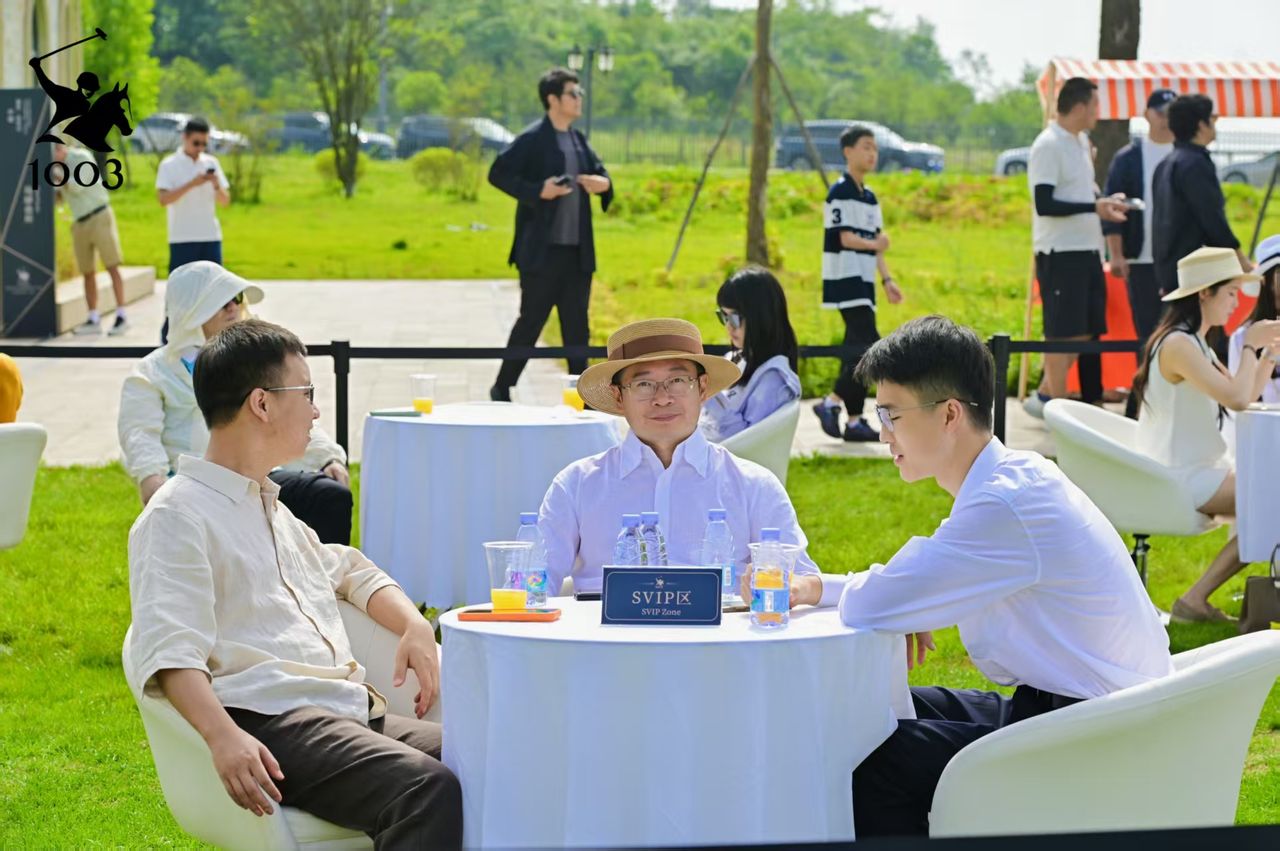
On stage at an Academy event
Autumn 2026

Students take on the Spartan Race, Chengdu
September 2026
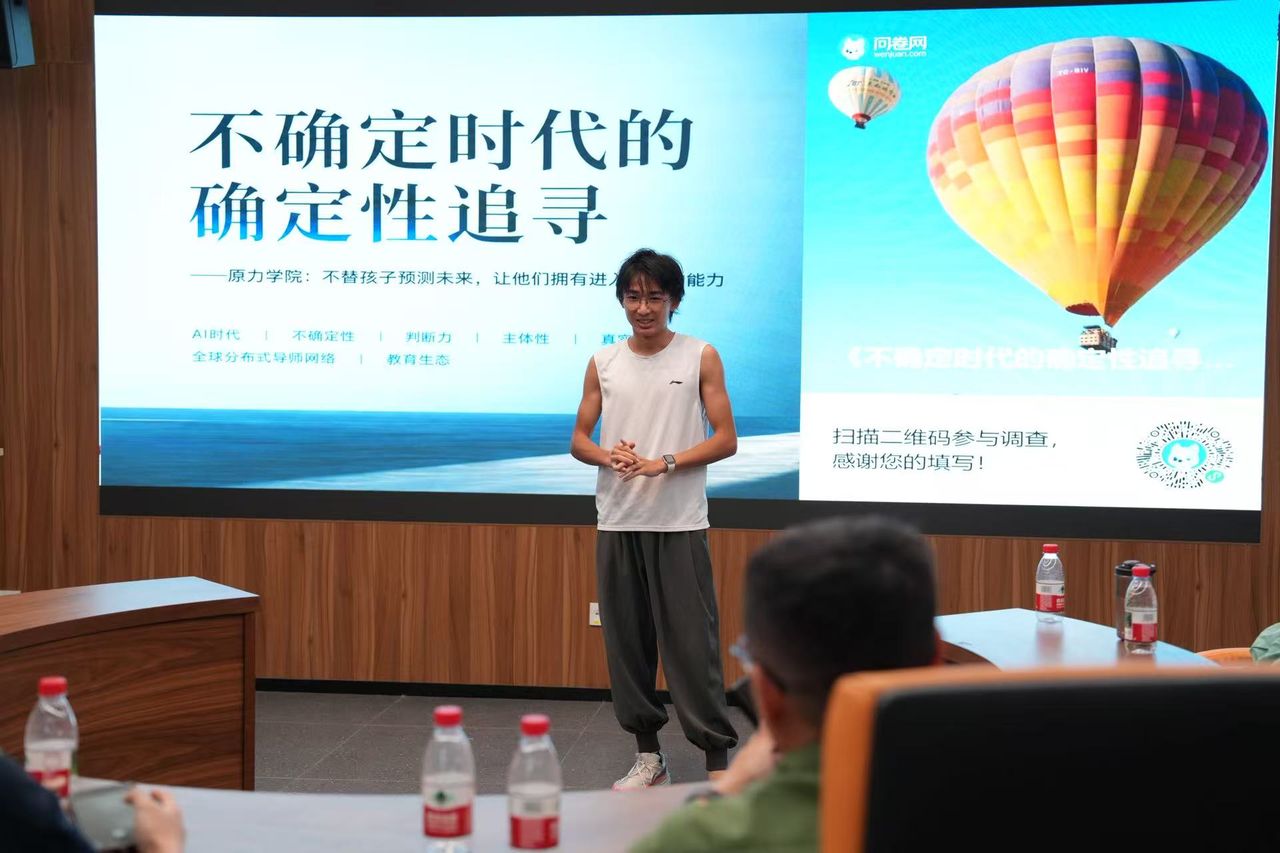
The community questionnaire: “The pursuit of certainty in an uncertain age”
Ongoing
External Recognition
Frameworks we teach toward
The Academy supports students through the SACE (South Australian Certificate of Education) framework, the AP program (Statistics, Calculus), and prepares research work for external programs — national modeling competitions, the AI olympiad, research awards, and international essay challenges. See Research for how this work is documented.